
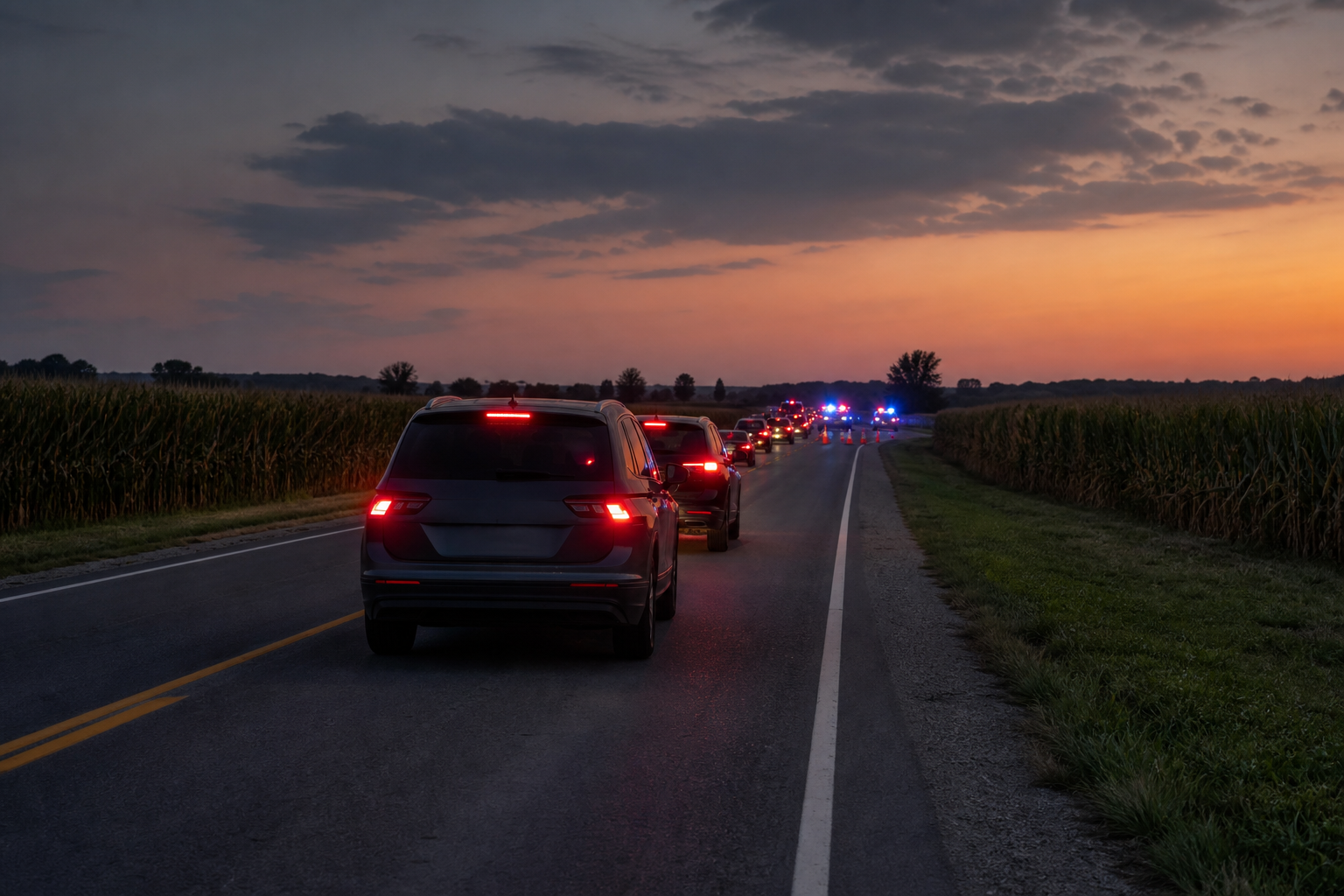
If you’re driving through South Central Indiana this Labor Day weekend, there’s a good chance you’ll see more police on the road than usual. The Indiana Criminal Justice Institute and Indiana State Police have announced increased patrols and sobriety checkpoints statewide through Labor Day as part of the national "Drive Sober or Get Pulled Over" campaign.
The best plan, of course, is simple: don’t drive impaired. But whether you’ve had nothing to drink or you’re worried about a stop, it helps to understand how checkpoints work and what your rights are.
Are Sobriety Checkpoints Legal in Indiana?
Yes. Indiana courts have upheld sobriety checkpoints as long as they are conducted according to a neutral, pre-planned procedure — officers can’t simply pick and choose vehicles at will. If you approach a checkpoint, you should expect a brief stop, a request for your license and registration, and a short interaction with an officer.
One thing many drivers don’t know: you are allowed to legally avoid a checkpoint — for example, by turning onto another street before you reach it — as long as you don’t commit a traffic violation doing so. An illegal U-turn to dodge a checkpoint is itself a reason to be stopped.
What You’re Required to Do (and What You’re Not)
You must:
- Stop when directed and provide your license and registration
- Exit the vehicle if an officer instructs you to
You are not required to:
- Answer questions like "Where are you coming from?" or "Have you been drinking?" You may politely decline to answer.
- Consent to a search of your vehicle. If an officer asks permission, you can say no. (Officers may still search if they have probable cause — but that’s a determination for later, and your refusal cannot be held against you.)
- Perform field sobriety tests (the walk-and-turn, one-leg stand, and similar roadside exercises). These are voluntary in Indiana, and they are graded subjectively.
The Big Exception: Indiana’s Implied Consent Law
Chemical tests are different. Under Indiana’s implied consent law, by driving on Indiana roads you’ve already agreed to submit to a certified chemical test (breath or blood) when an officer has probable cause to believe you’re intoxicated. Refusing a certified chemical test carries an automatic license suspension — at least one year, and longer if you have a prior OWI — and the refusal itself can be used against you in court. That suspension applies even if you’re never convicted of anything.
This is one of the most misunderstood areas of Indiana traffic law: roadside field sobriety exercises are voluntary, but the certified chemical test after a lawful arrest is a different matter with real consequences.
If You Are Arrested
An OWI arrest is serious — penalties can include license suspension, fines, probation, and jail time, and the consequences grow with prior offenses or aggravating factors. If you’re arrested this weekend:
- Stay calm and be polite. Nothing good comes from arguing at the roadside.
- Say that you want to speak with an attorney, then stop discussing your case — with officers, cellmates, or on the jail phone.
- Pay attention to deadlines. License suspension timelines move quickly, and early action matters.
Questions About an OWI Stop?
Sutton Law Office handles criminal defense matters, including OWI cases, for people throughout Greene, Monroe, Lawrence, and Owen counties. If you or a family member is facing charges after a traffic stop, contact us to talk through your situation and your options.
Have a safe Labor Day weekend — and if you’re celebrating, line up that designated driver now.
Leave a Reply